 ONE-BAG
You run everything yourself
Every topic is a short theory block followed straight away by a practical. Under two hours between an idea and your own hands on it, coffee break included.
Funded by the European One Health Association

A hands-on course for people who sequence bacteria and want to analyse those genomes themselves. Four days in València. Free at an EOHA full member institution, 300 € for everyone else.
This one is about what comes next: picking a method, reading what it gives you, and defending the conclusion in front of people who will act on it.
Every topic is a short theory block followed straight away by a practical. Under two hours between an idea and your own hands on it, coffee break included.
Five of them in total, so the pairing changes with the topic. When a command fails at 16:40 you are not waiting until the next break to have it looked at.
Everyone runs the same prepared datasets, so the whole room moves together. What you tell us you sequence steers the examples, the edge cases and the questions we spend time on.
An account on the institute's cluster with every tool ready, and a GitHub repository of slides, data and scripts that stays yours afterwards.
In the order a genome travels through the analysis, which is also the order of the four days.
Quality control of short and long reads, and knowing what to throw away.
Day 1Reference-based and core-genome SNP analysis, and when each one applies.
Day 1Short-read, long-read and hybrid assembly, and which one your question needs.
Day 2N50, completeness and contamination, and when not to trust the result.
Day 2Genome annotation, and the core and accessory split that a pan-genome reveals.
Day 3Comparative genomics for outbreaks and surveillance, disagreements included.
Day 3MLST, cgMLST, resistance genes and plasmids, discrepancies and all.
Day 4Phylogenies with the time, place and host metadata that make them mean something.
Day 409:30 to 17:30, with two coffee breaks and lunch on site every day. One row below is fifteen minutes, so every block is drawn at the length it lasts.
Scroll sideways for the other three days
Theory. Understanding raw reads and quality control.
Practical. Raw read QC and read processing.
Theory. Core-genome and reference-based SNP analysis.
Practical. SNP calling and SNP alignment.
Theory. Assembly and its quality: N50, genome size, GC content, completeness, contamination.
Practical. Assembling processed reads and evaluating the result.
Theory. Case studies in bacterial genome assembly.
Practical. Interpreting results and identifying problematic assemblies.
Theory. Core genome, accessory genome and pan-genome analysis.
Practical. Genome annotation and pan-genome calculation.
Theory. Aligning reference-based and non-reference-based assemblies.
Practical. Case studies in bacterial genome outbreaks.
Theory. MLST, cgMLST, AMR databases and plasmids.
Practical. Bacterial typing, AMR detection and plasmid annotation.
Theory. Phylogenetic tree construction and visualisation.
Practical. Phylogenetic reconstruction and tree visualisation.
Assembled with a One Health mindset: microbial genomics, public health surveillance, antimicrobial resistance and animal health, all in the same room.
 MC
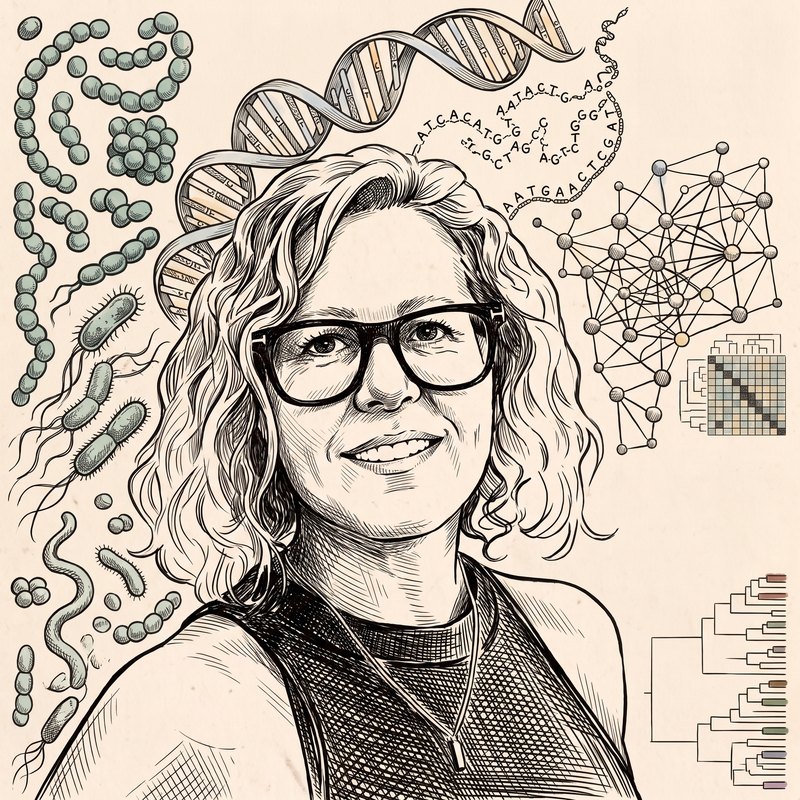
MCI2SysBio, CSIC and University of Valencia. PhD in Evolutionary Biology.
0000-0003-0752-0538 Days 2, 3, 4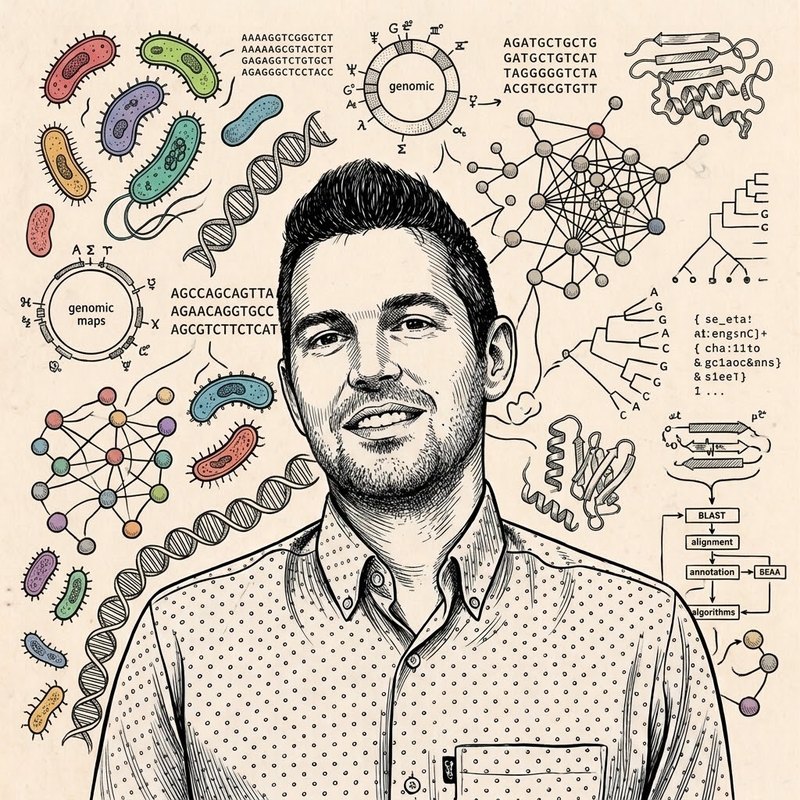
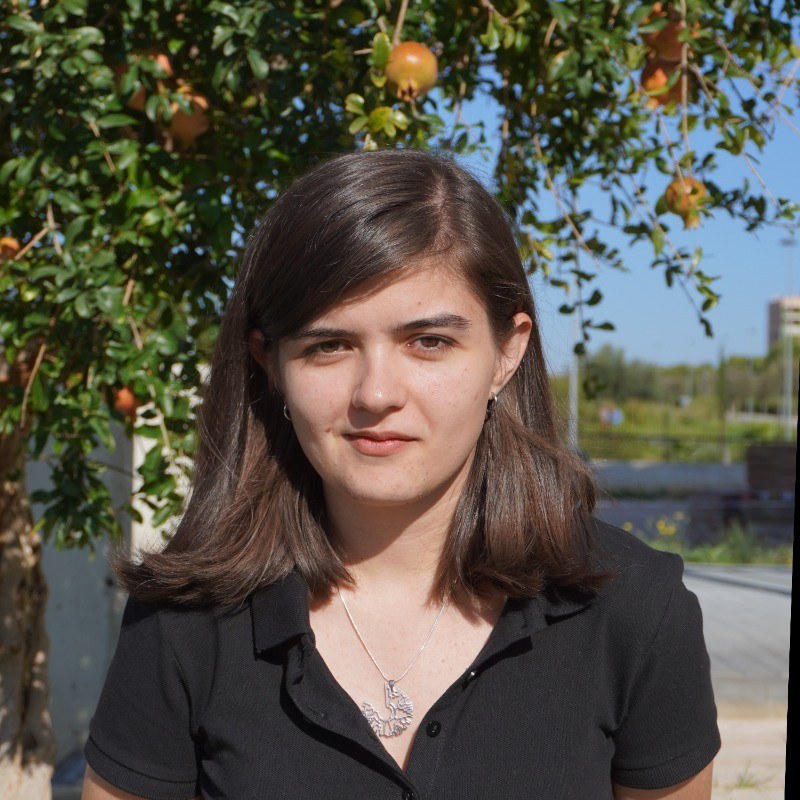
 FC
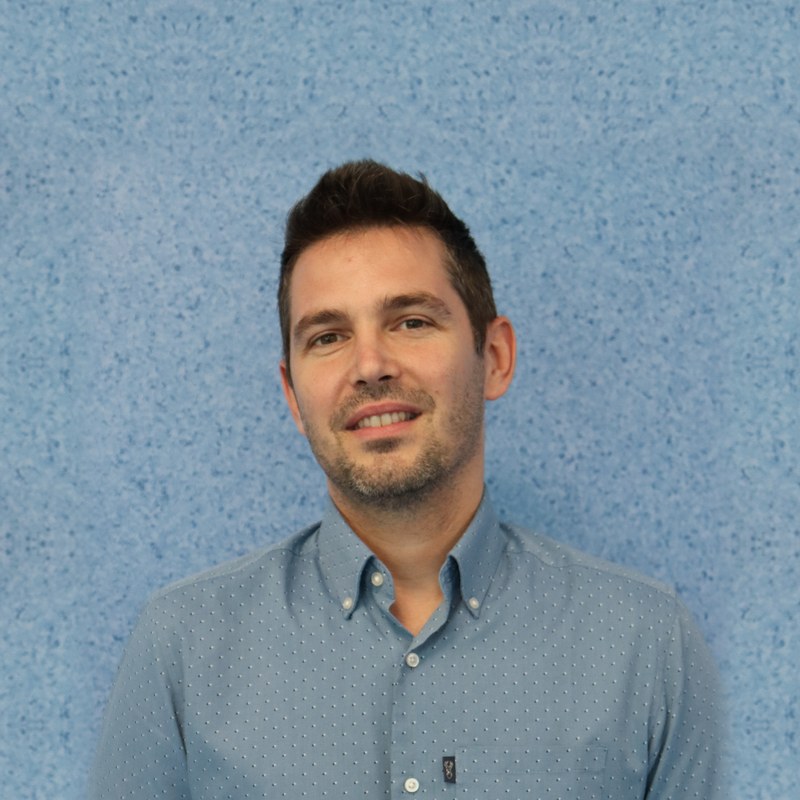
FCInstitute of Biomedicine of Valencia, CSIC. PhD in Microbial Genomics, LSHTM.
0000-0002-7882-2325 Days 2, 3, 4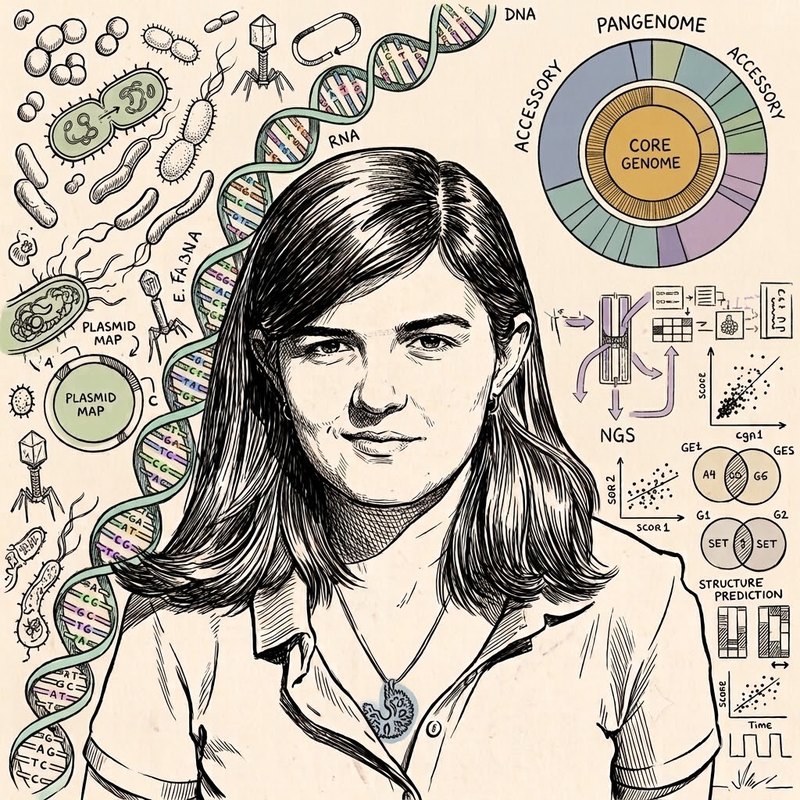
 PR
PRI2SysBio, CSIC and University of Valencia. MSc in Bioinformatics.
0000-0003-0727-5974 Days 3, 4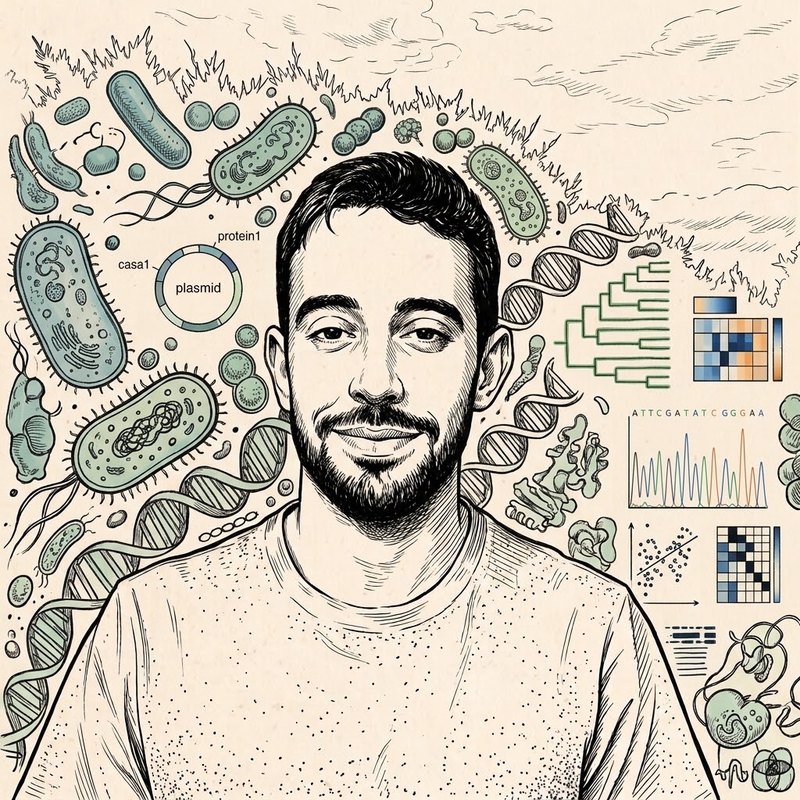
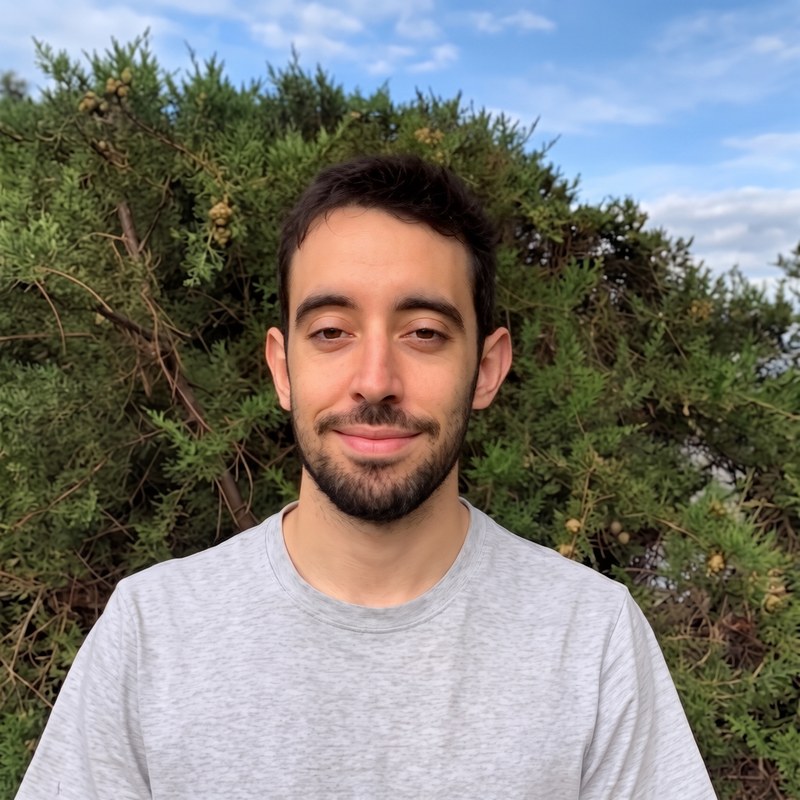 CS
CSVISAVET and Faculty of Veterinary Medicine, Complutense University of Madrid.
0000-0002-6008-6024 Days 1, 2, 4
 VL
VLVISAVET and Faculty of Biological Sciences, Complutense University of Madrid.
0000-0003-4096-0885 Day 1An account each on Garnatxa, the institute's compute cluster. You reach it over SSH from your own laptop, so there is nothing to install and nothing to carry. Bring a laptop, connect, start computing.
At I2SysBio, on the Science Park campus in Paterna. December here averages 17 °C by day, the sun sets at 17:38, and sessions finish at 17:30 with the city still open.

Funded by the European One Health Association with co-funding from the host institute, which is what makes the places free for people at its full member institutions. Everyone else pays a registration fee that covers exactly the same four days.
The 300 € is due within one week of your place being confirmed. Tell us if that week is difficult and we will work around it. After a week with no word, the place goes to the next person on the list.
Travel and accommodation for participants at an EOHA full member institution based in Spain.
Travel and accommodation for participants at an EOHA full member institution outside Spain.
Travel grants are only available for EOHA full member institutions and can be requested directly in the application form by briefly explaining, in a couple of sentences, what receiving the grant would mean to your research or institution. There will be no second deadline or additional application round, and decisions will reach all selected attendees during the second week of October to allow enough time to book flights at a reasonable price.
At a full member institution there is no registration fee, and travel and accommodation are the only things you cover yourself, and only if you do not receive a grant. Everyone else covers the 300 € as well.
Places are limited*, and some of them are held for people at EOHA full member institutions. Anyone who works with bacterial genomes can apply.
*Based on the number of applications, the number of participants per institute may be limited to ensure a balanced representation.
Applications closed on 1 October 2026. Everyone who applied hears in the second week of October, and the course runs 14 to 17 December.
Who you are, what you sequence, how comfortable you are on the command line. Then two short answers: what you would use bacterial genomics for, and what a travel grant would make possible. Your CV at the end.
Those two answers are what decides it: how relevant the course is to your work, and the difference it will make. Worth the ten minutes.
Confirmation and the travel grant decision arrive together, with the fee if one applies to you.
Say yes and pay within the week. If that week is awkward, tell us and we will work around it; it is silence that passes the place to the next person. Then the preparation material and your cluster login follow.
Not first come first served, so applying early does not put you ahead. It does mean you will not forget.
Last day for the form and the CV. Grant requests are part of it, so there is no second application.
Everyone is told whether the course goes ahead, before anybody books travel.
Offers and grant decisions go out, and the fee is asked for.
One week after a place is confirmed. A place that goes unpaid passes on, early enough for the next person to book.
You arrive with your questions and a laptop. The cluster account is waiting.
This is required. Any operating system, any age, as long as it connects to Wi-Fi and can open a terminal to connect over SSH. On Windows that means Windows Terminal or WSL, both free. All the computing runs on the cluster you log in to, so your laptop does not need to be powerful and you install nothing on it.
Basic Linux command line only. Moving between directories, running a program with arguments, reading its output. No Python, no R, no programming experience. We send preparatory material to everyone who registers.
The course only runs if enough people are selected. That is decided in the first week of October, before anybody is asked for money or books travel, and everyone who applied is told either way.
Your application is read by the five trainers and by nobody else. It is not shared with the funder, with the host institute's administration or with anybody outside that group, and it is not used to contact you about anything other than this course. The one exception is a registration fee, if you owe one: to invoice it, the host institute's finance office is given your name and your institution's billing details, and nothing else from what you sent. The form and the files it collects sit in Google Forms and Google Drive, and everything is deleted once the course has run and the certificates are out. Write to us at any point and we take your application out earlier, whether or not the deadline has passed.
Anyone can apply for a place. What working at a full member institution of the European One Health Association changes is the money: the course is free instead of 300 €, and the travel grants are open to you. So check rather than assume: there are 27 full members in 17 countries, and some are whole national research bodies rather than single centres, so you may be inside one without knowing it. From Spain, both CSIC and VISAVET at the Complutense University of Madrid are full members.
27 full members in 17 countries. The list on onehealthassoc.eu is the one that governs.
It takes a minute, and it decides both what the course costs you and whether you can ask for the travel money on the same form.
Four days, five trainers, and a tree at the end of it that is yours to defend.
No. You do need to be comfortable on the Linux command line: moving between directories, running a program with arguments, reading its output. We send a list of short preparatory courses to everyone who registers.
Your own laptop. That part is not optional, and we cannot lend you one. Any operating system and any age is fine, as long as it connects to Wi-Fi and can open a terminal to connect over SSH. On Windows that means Windows Terminal or WSL, both free. Everything runs on the cluster you log in to, so nothing is installed on your machine and it does not need to be powerful.
Bring it, and bring the questions that come with it. What the practicals will not do is run on a different dataset for everyone: they use prepared ones, so the whole group moves at the same pace and nothing stalls on a file that will not assemble. That is a deliberate choice, and it is what lets you finish four days with results you can compare against everyone else's.
Around that, your own data is welcome. The trainers are in the room at every break and at lunch, and what you tell us on the form about your organisms feeds into which examples and problem cases we use.
It is free for people at an EOHA full member institution: tuition, compute, materials and catering are covered by the association and the host institute, and nothing is invoiced to your lab. For everyone else the registration fee is 300 €, and it buys exactly the same four days. Travel and accommodation are yours either way, unless you get one of the travel grants, in which case you are reimbursed up to the limit for that grant.
The travel grants are for people at EOHA full member institutions, so check the list of full members before you write them off: whole research councils are on it, and you may be inside one without knowing.
Your place is confirmed in the second week of October, and the fee is due within one week of that. That week is short on purpose: mid December is an expensive time to fly to Spain and beds go early, so a place sitting unpaid is a place somebody else cannot plan around.
If the week does not work for you, write to us and say so. A finance office that needs three weeks to move an invoice is a reason to give you three weeks, not a reason to lose the place. What costs you the place is silence: after a week with no word from you, it goes to the next person on the list.
Write to us and the place can go to a colleague instead, so the seat is not wasted and neither is your money. What we cannot do is refund the fee once it is paid.
Yes. There are usually more good applications than places, so anyone who is not selected is told in the same message whether they are next in line. The places held for full member institutions and the open ones are filled separately, so each has its own queue, and a place that is not taken up is offered straight away to the first person waiting for that kind of place.
Anyone who sequences bacteria and wants to analyse those genomes, whatever their career stage and wherever they work. What decides it is how relevant the course is to your work and the difference it is likely to make. Being at an EOHA full member institution is what decides the money: no fee instead of 300 €, and the travel grants. Both are settled on the same form.
The course needs a minimum number of people to run, and that is settled in the first week of October, before anybody is asked for money. If we do not get there we tell everyone who applied as early as we can, so nobody books a flight for a course that will not happen.
Yes, after the course, stating 24 hours of teaching: six hours a day across the four days, which is the figure most training records ask for. You will also be asked for a short evaluation, which feeds into the next EOHA training.
English, all four days: the slides, the exercises and the questions. You do not need it to be fluent, and the trainers between them also speak Spanish and Catalan if a concept refuses to land in English.
The application form ends with a free text box. Write the question there and we answer it before the deadline, whether or not you go on to apply.
From the logo above: ONE Health BActerial Genomics. The coloured letters give it away.
Everything you need for four days of bacterial genomics, packed into one bag.
Funded and hosted by